
About Compostable Cutlery
Fully compostable cutlery is made of biomaterials and plant raw materials, which completely decompose into water and carbon dioxide in 3-6 months under industrial composting conditions.
Our cutlery has strictly passed the EN13432/ASTM D6400 international degradation certification, with no micro-plastic residues throughout the whole process from raw materials to waste.
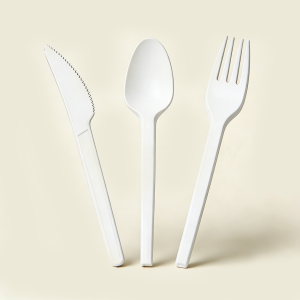
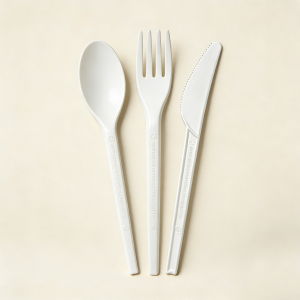
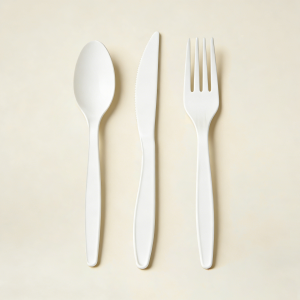
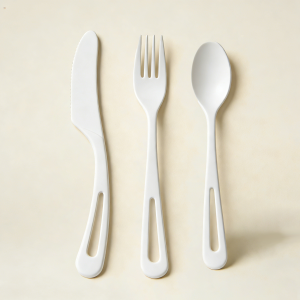
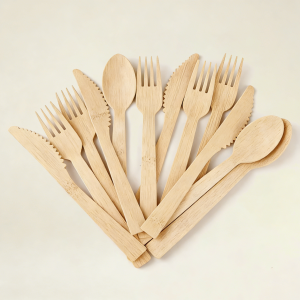
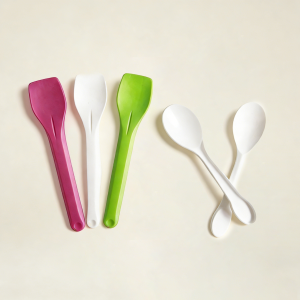
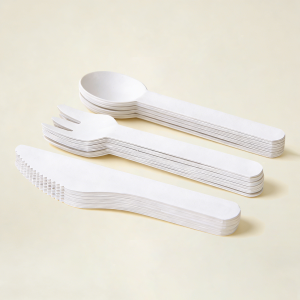
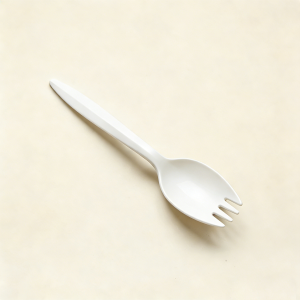
Pick One You Prefer
There are a variety of composatble cutlery to choose from, including different materials and different styles.
Advantages of Compostable Cutlery

- BPI/DIN Certified Compostable
Compostable degradation tests with international approvals (e.g. EN13432, ASTM D6400).
- FDA Compliant Food Safe
BPA free, PFAS free and other harmful substances free.
- Excellent Durability
Maintain hardness in hot food for hours without softening,
- Flexibility in Customisation
A wide range of customisation options such as size, colour, emgraving, etc. are available.
Comparison of Materials
Comparison of CPLA and ordinary plastics to let you know more about our products.
| Criteria | CPLA Cutlery | Traditional Plastic Cutlery |
|---|---|---|
| Material Composition | Made from plant-based PLA (cornstarch/sugarcane) + crystallizing agents | Derived from petroleum-based polymers (PP, PS, PET) |
| Biodegradability | ✅ Fully compostable (meets EN 13432/ASTM D6400; breaks down in 3–6 months under industrial composting) | ❌ Non-biodegradable (takes 100–500 years to decompose; fragments into microplastics) |
| Heat Resistance | 🔥 Up to 85°C (suitable for hot foods/beverages) | 🌡️ Up to 120°C (higher heat tolerance) |
| Durability | ⚠️ Moderate (stiffer but may snap under heavy pressure) | 💪 High (flexible and impact-resistant) |
| Environmental Impact | 🌱 Low carbon footprint (renewable resources; reduces fossil fuel dependency) | 🏭 High pollution (contributes to ocean plastic waste and GHG emissions) |
| Certifications | 📜 OK Compost, BPI, AS 5810 (industrial/home compostable) | ❌ No eco-certifications (unless labeled “recyclable”) |
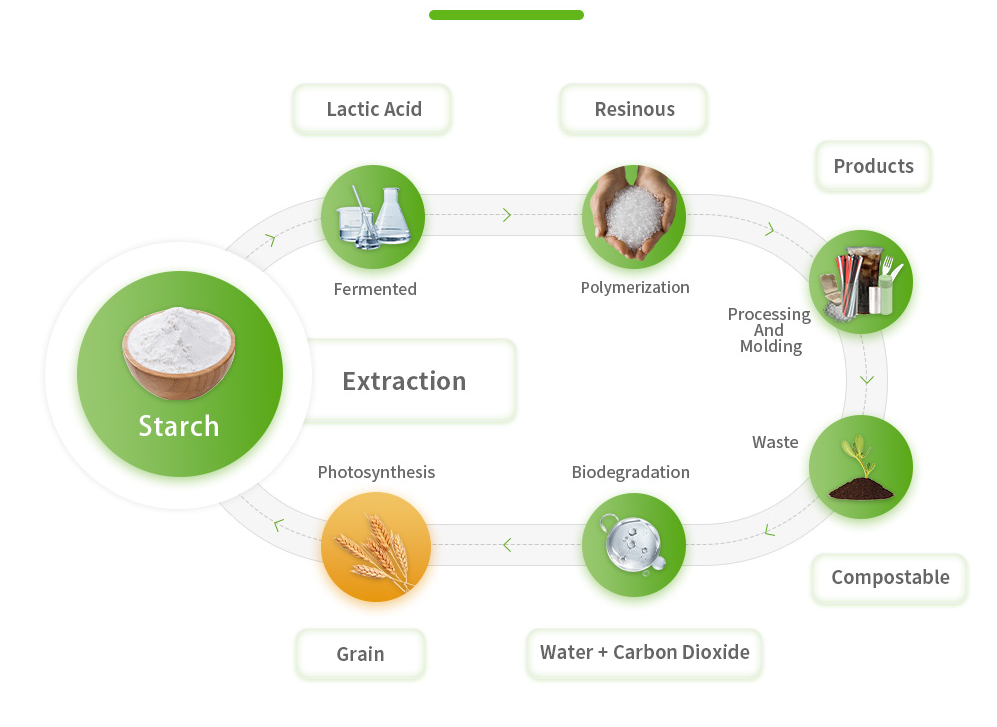
Life Cycle of Compostable Cutlery
Fully compostable cutlery do not produce microplastics or other harmful substances from the beginning of the raw material to the completion of degradation. From nature, to nature.
Customizations
Provide a wide range of customised services to meet the diverse needs of customers.
Size
Color and Carving
Packing and Quantity
Shape
Why You Should Switch To CPLA for Restaurants
Top 5 Brands Switching to compostable cutlery,similar with ours products
McDonald’s (Europe)
CPLA Sporks for Happy Meals
Replaced plastic sporks with BPI-certified CPLA versions in 2023, reducing 200+ tons of waste annually.
Sweetgreen (USA)
CPLA Salad Forks for Takeout
Uses custom-branded CPLA forks (printed with soy ink) for eco-conscious branding.

HelloFresh (Germany)
CPLA Meal Kit Cutlery
Includes CPLA knife/spoon sets in meal boxes (EN13432 certified for home composting).
Compass Group (UK)
CPLA Banquet Cutlery
Serves 1M+ CPLA forks/knives monthly at corporate events to meet UK plastic tax regulations.
Common Questions
Can compostable cutlery handle hot food?
It depends on the material: CPLA cutlery: Resists heat up to 85°C – suitable for warm dishes (not boiling soup). Bamboo/Wood cutlery: Handles 100°C+ but may dry out with repeated use.Can compostable cutlery be microwaved?
Not recommended. We have one kind of cutlery can be used in dishwasher.Are compostable cutlery really compostable?
Yes, but only under specific conditions: Industrial composting (EN13432/ASTM D6400): Degrades completely in 3-6 months (50-60°C with microbes). ♻️ Tip: Our CPLA cutlery has BPI certification logos to verify.
Global Government Policies on Compostable Cutlery
1. European Union (EU)
Regulation: Single-Use Plastics Directive (SUPD, 2019/904) bans conventional plastic cutlery.
Compostable Alternatives: Only EN 13432-certified cutlery is allowed (industrial composting).
Labeling: Must display “compostable” logo and disposal instructions.
Exceptions: Allowed for specific uses (e.g., pre-packaged food).
2. United States
Federal Policy: No nationwide ban, but states like California (SB 54) and New York mandate compostable alternatives by 2025–2032.
Certification: Requires ASTM D6400 (industrial) or BPI certification.
Local Bans: Cities like San Francisco enforce compostable-only foodware.
3. Canada
Regulation: Single-Use Plastics Prohibition (SOR/2022-138) bans plastic cutlery; compostable versions must meet CAN/BNQ 0017-088.
Provincial Rules: British Columbia requires compostable foodware for dine-in/takeout.
4. Australia & New Zealand
Policy: National Packaging Targets (2025) require compostable cutlery for foodservice.
Standards: AS 4736 (industrial) or AS 5810 (home compostable).
5. China
Policy: Plastic Ban (2020–2025) phases out non-degradable cutlery in major cities.
Standards: Must comply with GB/T 38082-2019 (biodegradability).
6. India
Regulation: Plastic Waste Management Rules (2022) ban single-use plastic cutlery; compostable alternatives exempt if certified (ISO 17088).
Enforcement: Major cities (Mumbai, Delhi) actively penalize violations.
7. Japan & South Korea
Japan: No strict ban, but Bioplastics Roadmap (2021) promotes compostable alternatives.
South Korea: Act on Resource Circulation mandates compostable cutlery for restaurants.
8. Latin America
Chile: Single-Use Plastics Law (2021) bans plastic cutlery; compostable versions must meet ISO 18606.
Brazil: Major cities (São Paulo) enforce compostable foodware laws.