
About Compostable Bags
Fully compostable bags are made of biomaterials and plant raw materials, which completely decompose into water and carbon dioxide under home and industrial composting conditions.
Our bags have strictly passed the EN13432/ASTM D6400 international degradation certification, with no micro-plastic residues throughout the whole process from raw materials to waste.
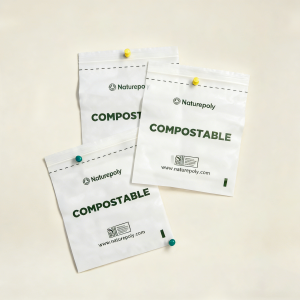
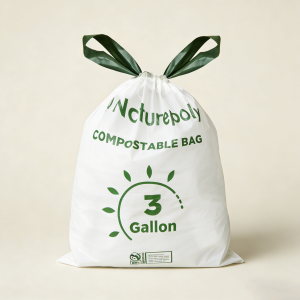
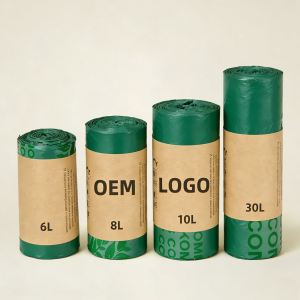
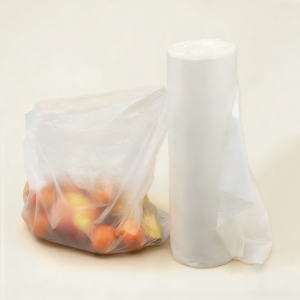
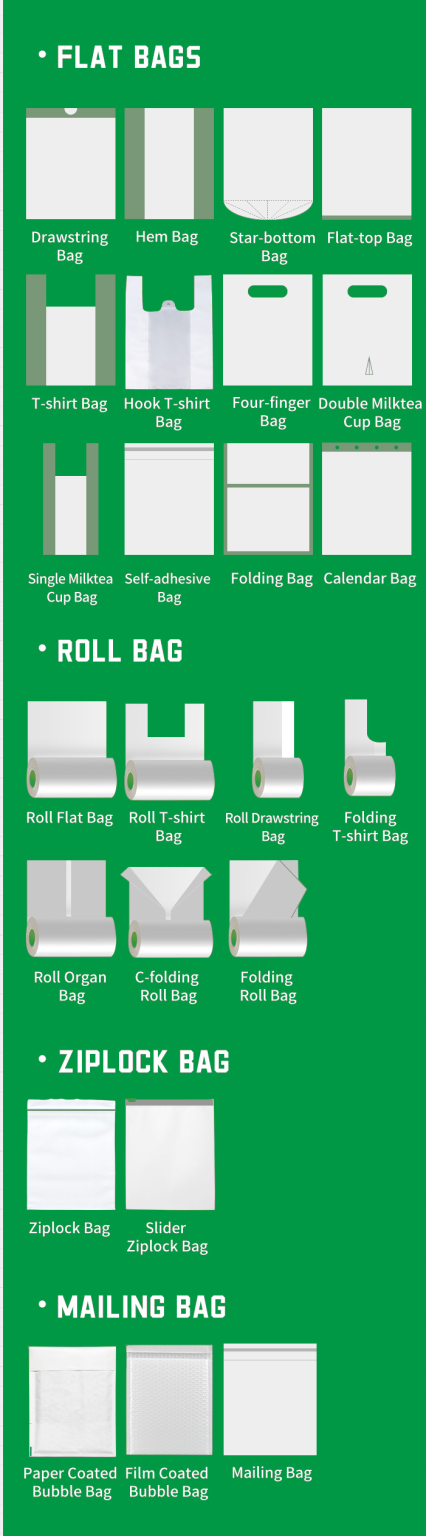
Various of bags
There are a variety of composatble bags to choose from, including different usages and shapes.
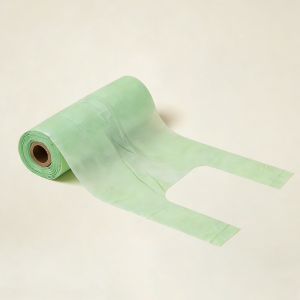
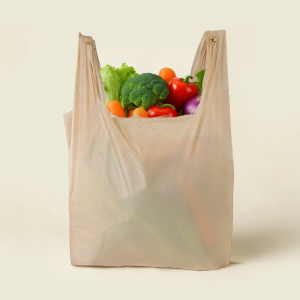


Advantages of Compostable Bags

- BPI/DIN Certified Compostable
Compostable degradation tests with international approvals (e.g. EN13432, ASTM D6400).
- FDA Compliant Food Safe
BPA free, PFAS free and other harmful substances free.
- Excellent Durability
Each batch of production, we will do hanging tests in our lab.
- Flexibility in Customisation
A wide range of customisation options such as size, colour, logo printing, etc. are available.
Comparison of Materials
Comparison of fully compostable materials and ordinary plastics to let you know more about our products.
| Criteria | Traditional Plastic Bags 🛑 | Biodegradable Bags ✅ | Scientific Reference |
|---|---|---|---|
| Raw Material | Petroleum-based (PE/PP) | Cornstarch/PLA/PHA/Sugarcane Bagasse | 2.5-ton CO₂ reduction per ton PLA (Nature, 2022) |
| Decomposition | 500+ years (microplastic residue) | 3–24 months (complete mineralization) | ASTM D5511 test results |
| Byproducts | Microplastics + toxic additives | H₂O + CO₂ + humus | TUV Rheinland certification |
| Temp Resistance | -30°C to 110°C | PLA: 0°C to 50°C PHA: -20°C to 90°C | GB/T 38082-2019 thermal test |
| Load Capacity | 5–10 kg (0.025mm thickness) | 3–8 kg (same thickness) | ISO 6383-1 tensile strength test |
| Production Cost | $0.04–0.07 per bag | $0.17–0.42 per bag | 2023 China Plastics Association report |
| Policy Risk | Banned in 137 countries/regions | EU SUP Directive recommended | UNEP 2023 Whitepaper |
| Recyclability | Only 9% effectively recycled | 100% compostable | Ellen MacArthur Foundation data |
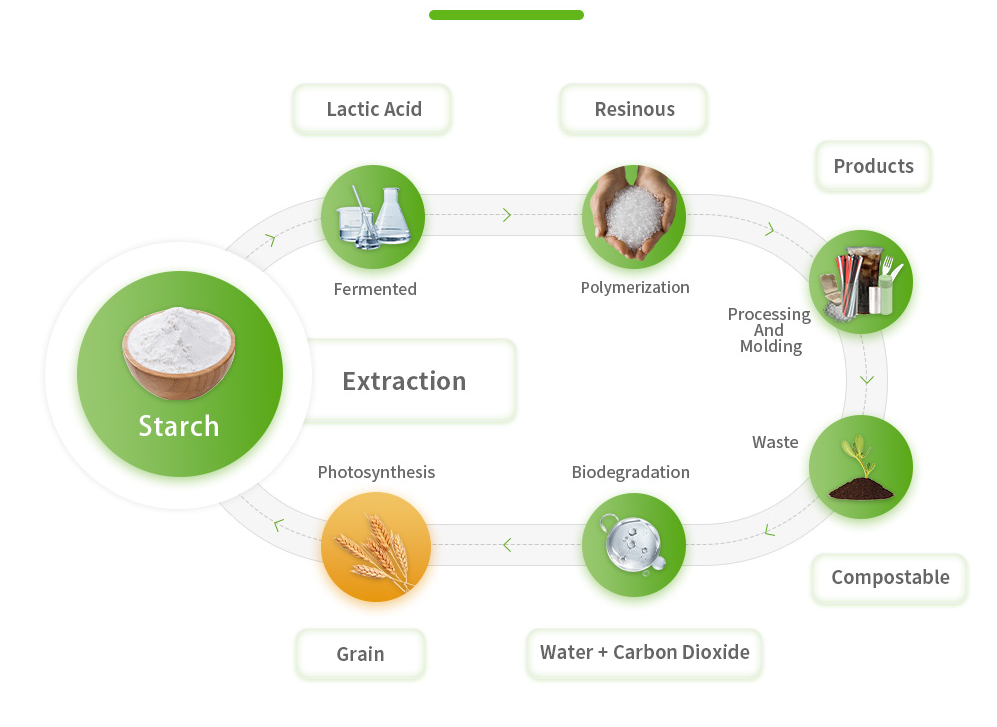
Life Cycle of Compostable Bags
Compostable bags do not produce microplastics or other harmful substances from the beginning of the raw material to the completion of degradation. From nature, to nature.
Customizations
Provide a wide range of customised services to meet the diverse needs of customers.
Size
Color and Printing
Packing and Quantity
Shape
Different Shapes
Global Government Policies on Compostable Bags
Phased Plastic Ban:
Tier Effective Allowed Alternatives Tier-1 Cities Since 2022 PLA/PBS/PHA bags Rural Areas By 2025 Starch-based (≥30%) Core Standard: GB/T 38082-2021
Subsidies: ¥1,500-3,000/ton for certified resin producers
SUP Directive (Single-Use Plastics):
✅ Permitted: EN13432-certified industrially compostable bags
❌ Banned: Oxo-degradable plastics
📅 Deadline: 2025 for all member states
Key Rules:
Mandatory labeling (e.g., “Industrial composting only”)
Minimum €0.30 charge per bag (including biodegradable)
Plastics Pact (CPP):
PE bags banned since 2023
Biodegradable bags must:
Meet BNQ 9011-911 standard
Be used where ≥70% composting coverage exists
State-Level Variations:
State Policy Highlights California $0.10/plastic bag tax (2024+) New York BPI-certified bags only Texas No statewide ban (local bans apply) Federal: USDA BioPreferred program for procurement
Bioplastic Roadmap:
Target: 2 million tons/year by 2030
Labeling System:
🔵 Green Triangle: Home compostable
🔴 Red Triangle: Industrial compostable
2022 Plastic Waste Amendment:
Ban on bags <120 microns
Biodegradable Exemption:
CPCB certification (≥90% degradation in 90 days)
Must display “BIODEGRADABLE” in green
Common Questions
Is compostable the same as throwaway?
No. The three elements of temperature/humidity/microorganisms need to be satisfied for composting degradation.Do fully compostable bags melt when they come into contact with water?
No, the actual measurement of PLA bag soaking 7 days weight loss <5%.Are fully compostable bags less environmentally friendly than paper bags?
Not. Paper bag production is 300% more water intensive, and reuse requires ≥3 times to offset the carbon footprint.Does the use of compostable materials affect food security?
Won't. Global PLA consumes only 0.02 per cent of maize production and is produced in China from non-staple grains such as cassava.