
About Compostable Resin
Fully compostable resin is made of biomaterials and plant raw materials, which completely decompose into water and carbon dioxide in 3-6 months under industrial composting conditions.
Our resin has strictly passed the EN13432/ASTM D6400 international degradation certification, with no micro-plastic residues throughout the whole process from raw materials to waste.
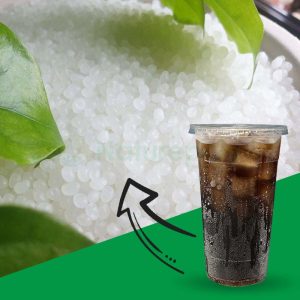
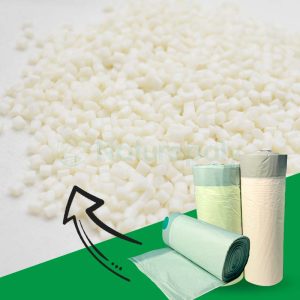
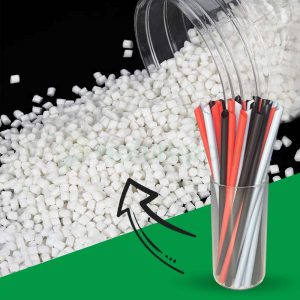
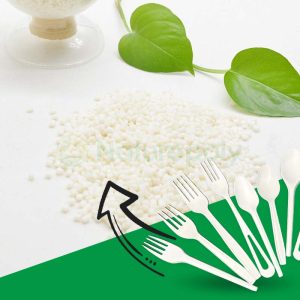
Compostable resins for different usages
There are a variety of composatble resin to choose from, including different usages and different end products.
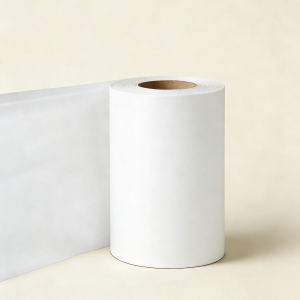
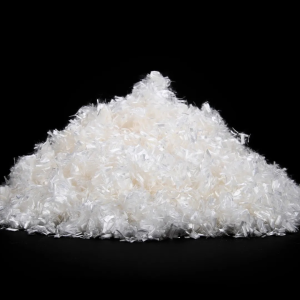
Advantages of Compostable resin

- BPI/DIN Certified Compostable
Compostable degradation tests with international approvals (e.g. EN13432, ASTM D6400).
- FDA Compliant Food Safe
BPA free, PFAS free and other harmful substances free.
- Flexibility in Customisation
A wide range of customisation options such as size, colour, logo printing, etc. are available.
Comparison of Materials
Comparison of fully compostable materials and ordinary plastics to let you know more about our products.
Criteria | Compostable Resin Pellets | Conventional Plastic Resin Pellets |
Base Material | Plant-based (PLA, PHA, PBS, starch) or bio-polyesters (PBAT) | Petroleum-derived (PP, PE, PET, PS) |
Biodegradability | ✅ Fully compostable (3-6 months under industrial conditions) | ❌ Non-degradable (persists 100+ years) |
Certification Standards | EN 13432, ASTM D6400, OK Compost INDUSTRIAL | None (unless recycled content) |
Processing Temperature | 🌡️ Lower melt temp (150-180°C for PLA) | 🌡️ Higher melt temp (200-300°C for PP/PE) |
Mechanical Properties | Lower tensile strength; brittle without modifiers | High strength/ductility (tunable with additives) |
Barrier Properties | ⚠️ Moderate O₂/moisture permeability | ✅ Excellent barrier (e.g., EVOH multilayer) |
End-of-Life Options | ♻️ Industrial composting only (requires 58-60°C) | 🗑️ Landfill/incineration (<10% recycled) |
Carbon Footprint | 🌱 Carbon-neutral if sourced sustainably | 🏭 High GHG emissions (3-5kg CO₂/kg resin) |
Regulatory Status | ✅ Exempt from plastic bans (EU SUPD, Canada SOR) | ❌ Restricted in 130+ jurisdictions |
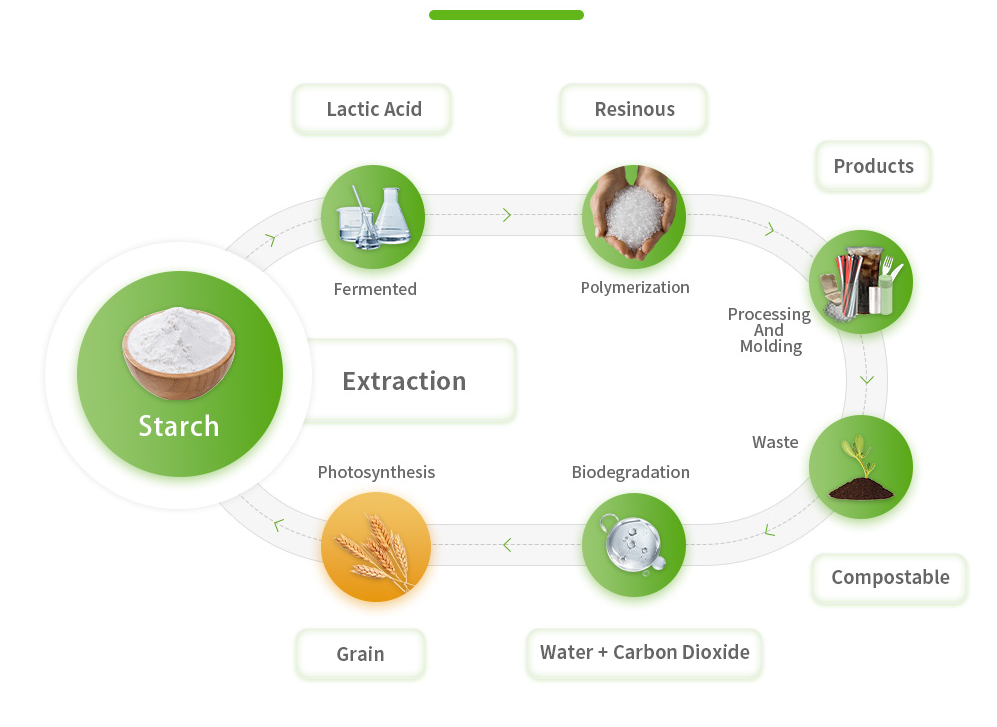
Life Cycle of Compostable Resin
Fully compostable resin do not produce microplastics or other harmful substances from the beginning of the raw material to the completion of degradation. From nature, to nature.
Customizations
Provide a wide range of customised services to meet the diverse needs of customers.
Size
Color
Packing and Quantity
Heat-resistance
Common Questions
Can compostable resins be processed on traditional plastic equipment?
Yes, but with adjustments. Our technical team will help and support. Tip: Add a drying step (50°C for 4h) to prevent hydrolysis.What is the optimal PLA/PBAT blend ratio?
Depends on application. We will share TDS based on your usage and end products.Can heat resistance of compostable injection resins be improved?
Yes, we have various of formulas for different usages.
Applications of Compostable Materials Across Industries
Compostable materials are increasingly adopted as sustainable alternatives to conventional plastics. Below is a breakdown of their key applications across various sectors:
1. Food Packaging
Applications:
Takeaway Containers (PLA/CPLA-based clamshells, bowls)
Food Wrap & Bags (PBAT-starch blends for cling films, produce bags)
Disposable Cutlery & Tableware (PLA/CPLA forks, spoons, plates)
Coffee Capsules & Tea Bags (Home-compostable PLA mesh)
Advantages:
✔ Reduces plastic waste in fast-food & delivery sectors
✔ Complies with EU SUPD and US state bans on single-use plastics
2. Agriculture
Applications:
Mulch Films (PBS/PLA blends that degrade after harvest)
Plant Pots & Seed Trays (Fiber-based or PLA containers)
Twine & Nets (PHA-coated jute for crop support)
Advantages:
✔ Eliminates microplastic contamination in soil
✔ Certified under EN 17033 for biodegradable mulch films
3. Textiles & Nonwovens
Applications:
Wipes & Hygiene Products (PLA nonwovens for facial wipes, masks)
Shopping Bags (Compressed starch or PLA fiber bags)
Apparel (PHA-based fibers for sportswear linings)
Advantages:
✔ Marine-degradable (per ISO 18830 testing)
✔ Replaces polypropylene in disposable textiles
4. Consumer Goods
Applications:
Disposable Gloves (PBAT blends for food service)
Party Tableware (PLA cups, CPLA cutlery)
Pet Waste Bags (Certified compostable PBAT films)
Advantages:
✔ Accepted in municipal composting programs (e.g., San Francisco)
✔ Avoids penalties under plastic bag bans
5. Industrial & Specialty
Applications:
3D Printing Filaments (PLA/PHA blends for prototyping)
Adhesive Backings (Starch-based labels for compostable packaging)
Fishing Gear (PBS nets to prevent “ghost fishing”)
Advantages:
✔ Circular economy integration (Cradle-to-Cradle certified)
✔ Complies with MARPOL Annex V for marine degradation