
About Compostable Tableware
Fully compostable tableware are made of biomaterials and plant raw materials, which completely decompose into water and carbon dioxide in 3-6 months under industrial composting conditions.
Our tableware have strictly passed the EN13432/ASTM D6400 international degradation certification, with no micro-plastic residues throughout the whole process from raw materials to waste.
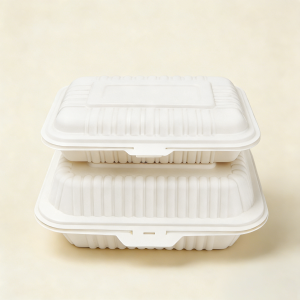
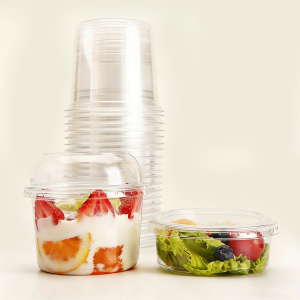
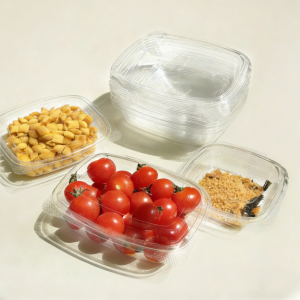
Advantages of Compostable Tableware
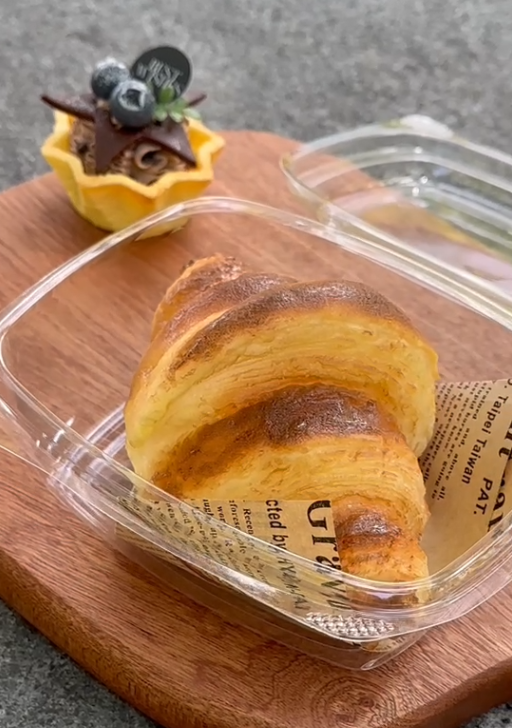
- BPI/DIN Certified Compostable
Compostable degradation tests with international approvals (e.g. EN13432, ASTM D6400).
- FDA Compliant Food Safe
BPA free, PFAS free and other harmful substances free.
- Excellent Durability
Maintain hardness in liquids for hours without softening,
- Flexibility in Customisation
A wide range of customisation options such as size, colour, logo printing, etc. are available.
Comparison of Materials
Comparison of fully compostable materials and ordinary plastics to let you know more about our products.
Criteria | CPLA Containers | PLA Containers | Traditional Plastic Containers |
Material Composition | Crystallized PLA | Polylactic Acid | Petroleum-based (PP, PS, PET) |
Biodegradability | ✅ Industrial compostable (EN 13432) | ✅ Industrial compostable (EN 13432) | ❌ Non-biodegradable (500+ years) |
Heat Resistance | 🔥 Up to 85-95°C | 🌡️ Up to 50-60°C (may deform) | 🌡️ Up to 120-140°C |
Environmental Impact | 🌱 Low carbon footprint | 🌱 Renewable resources | 🏭 High pollution (microplastics) |
Certifications | 📜 OK Compost, BPI | 📜 BPI, EN 13432 | ❌ None (unless recycled content) |
Clarity/Appearance | Milky translucent | Crystal clear | Transparent/opaque options |
End-of-Life Options | ♻️ Industrial composting | ♻️ Industrial composting | 🗑️ Landfill (9% recycled) |
Regulatory Status | ✅ Banned plastic alternative in EU/Canada | ✅ Allowed where plastics banned | ❌ Banned in many regions |
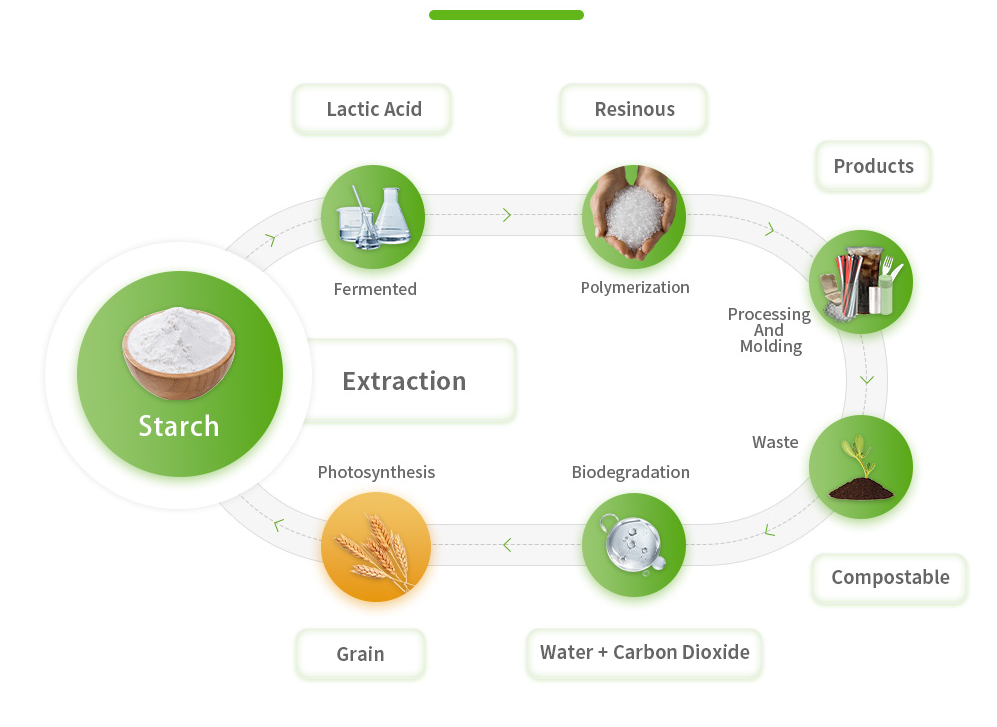
Life Cycle of Compostable Tableware
Fully compostable tableware do not produce microplastics or other harmful substances from the beginning of the raw material to the completion of degradation. From nature, to nature.
Customizations
Provide a wide range of customised services to meet the diverse needs of customers.
Size
Color and Printing
Packing and Quantity
Heat-resistance
CPLA Food Containers – Trusted by Brands
Why Brands Choose CPLA?
CPLA (Crystallized PLA) is becoming the top choice for brands transitioning away from plastic, and for good reason. Unlike standard PLA, CPLA withstands temperatures up to 110°C, making it ideal for hot food containers, coffee lids, and microwave-safe meal prep boxes—addressing PLA’s key weakness.
Globally, plastic bans (like the EU’s SUP Directive) now mandate compostable packaging. CPLA’s BPI/EN13432 certifications ensure compliance, while its plant-based origin appeals to eco-conscious consumers—67% of whom pay more for sustainable packaging (Nielsen 2023).
Cost is another advantage. CPLA is 30% cheaper than bamboo fiber and compatible with existing plastic production lines, minimizing supply chain disruptions. Major brands like McDonald’s and Starbucks use CPLA for salads and cold drinks, proving its durability and consumer appeal.
For businesses, CPLA isn’t just eco-friendly—it’s a strategic investment in compliance, cost control, and brand differentiation. As plastic taxes rise, CPLA offers a future-proof solution.
Tesco (UK)
PLA Fresh Produce Trays
Replacement of plastic trays in the fresh produce section with PLA + sugar cane pulp moulded boxes (microwave defrostable)
McDonald’s (Europe)
CPLA Salad Containers
Replacement of salad containers in European shops with CPLA containers (EU SUP ban compliant) with 95°C heat resistance.
Reduced plastic usage by 150+ tonnes per year.

Sweetgreen (USA)
CPLA Takeout Bowls
Customised Branded LOGO embossed CPLA bowl, high temperature resistant suitable for takeaways
Common Questions
Can compostable food containers be microwaved?
It depends on the material: PLA containers are not heat-resistant, But CPLA containers are safe for short heating. Always check for a microwave-safe symbol on the packaging.Are compostable plates good for greasy foods?
PLA and CPLA are naturally oil-resistant. Ideal for fried foods.Can compostable tableware decompose in home compost?
Only if labeled 'Home Compostable' (e.g., OK Compost HOME certified). Otherwise, they are industial compostable.Are compostable or recyclable tableware more eco-friendly?
Compostables win if properly disposed: Recyclables: Only 9% of plastics are actually recycled (source: EPA). Contamination risks are high. Compostables: Turn into soil nutrients (if composted). Choose BPI-certified for guaranteed breakdown.
Global Government Policies on Compostable Tableware
| Country/Region | Policy Overview | Certification Required | Status |
|---|---|---|---|
| European Union | • Bans conventional plastic food containers under SUPD (2019/904) • Allows PLA/CPLA if industrially compostable | EN 13432 OK Compost INDUSTRIAL | Enforced (2021) |
| United States | • No federal ban; state-level mandates (CA, NY, WA) • BPI-certified PLA/CPLA exempt from plastic bans | ASTM D6400 BPI Certification | State-dependent (2023–2025) |
| Canada | • Single-Use Plastics Prohibition (2022) • PLA/CPLA must meet CAN/BNQ 0017-088 | CAN/BNQ 0017-088 (≈EN 13432) | Enforced (2023) |
| Australia/NZ | • National Packaging Targets (2025) • Requires compostable alternatives for takeaway | AS 4736 (industrial) AS 5810 (home) | Phase-in |
| China | • Plastic Ban (2020–2025) in major cities • PLA/CPLA must comply with GB/T 38082 | GB/T 38082-2019 (similar to EN 13432) | Rolling enforcement |
| India | • Plastic Waste Rules (2022) • Exempts certified compostable containers | ISO 17088 | Partial enforcement |
| Japan | • Voluntary Bioplastics Roadmap • No strict bans, but subsidies for PLA adoption | – | Market-driven |
| South Korea | • Resource Circulation Act • Mandates compostable packaging for franchises | KS M 3100 | Enforced (2022) |
| Latin America | • Chile/Colombia: Bans plastics; allows certified PLA • Brazil: Municipal laws (SP, RJ) | ISO 18606 | Patchy enforcement |